The right manufacturer for you, send your inquiry to us! | info@infende.com

How to Choose a Reliable Pipe Bends Manufacturer China: A Practical Buyer’s Guide
When sourcing from a pipe bends manufacturer China, buyers often face a common challenge: how to distinguish a truly capable factory from a trading company or a small workshop with limited capabilities. The right partner can ensure consistent quality, smooth communication, and long-term cooperation—while the wrong one can lead to delays, defects, and costly misunderstandings.
This guide breaks down the key factors you should evaluate before choosing your supplier.
1. Consistent Quality Is the Foundation
The most important factor is quality consistency, not just a few good samples.
A reliable manufacturer should:
- Maintain stable production standards across batches
- Have internal quality control procedures
- Deliver repeatable results over time
Tip: Always request samples from different production batches, not just one-off samples.
2. Clear and Efficient Communication
Good communication is often underestimated, but it directly affects project success.
A professional factory should:
- Respond quickly and clearly
- Understand technical drawings and specifications
- Be proactive in solving problems
Poor communication usually leads to:
- Incorrect production
- Delays
- Increased costs
3. Strong Pipe Bends Technical Capability
Not all factories have the same bending capabilities. A qualified pipe bending manufacturer China should have:
- Multiple mandrel bending machines
- Experience with different materials (stainless steel, aluminum, mild steel)
- Ability to control deformation during bending
Advanced factories can handle:
- Tight radius bends
- Thin-wall tubing
- Complex geometries
4. Ability to Create Technical Drawings (Very Important)
A key sign of a professional factory is whether they can create or modify technical drawings.
Why this matters:
- It shows the factory has in-house engineers or designers
- They can help optimize your design for manufacturability
- They reduce errors before production starts
⚠️ Many small workshops do NOT have drawing engineers, which often leads to trial-and-error production.
5. Check Raw (Unfinished) Products to Judge Real Quality
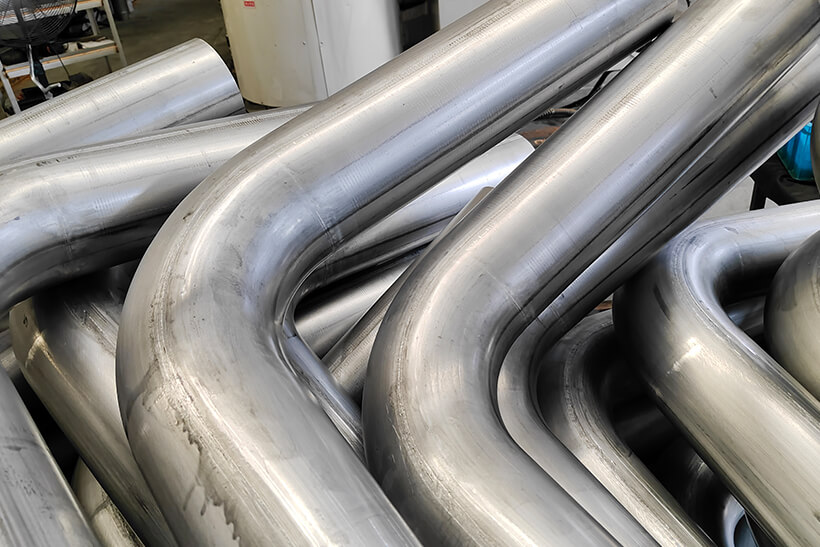
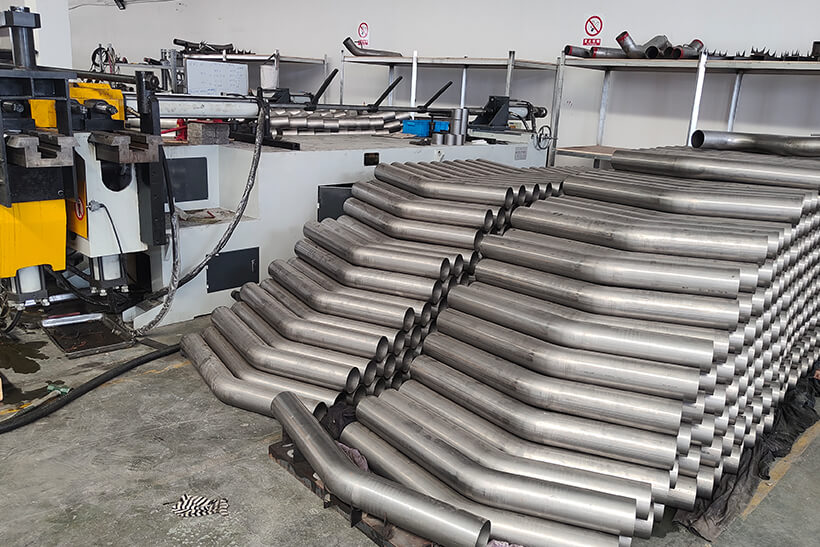
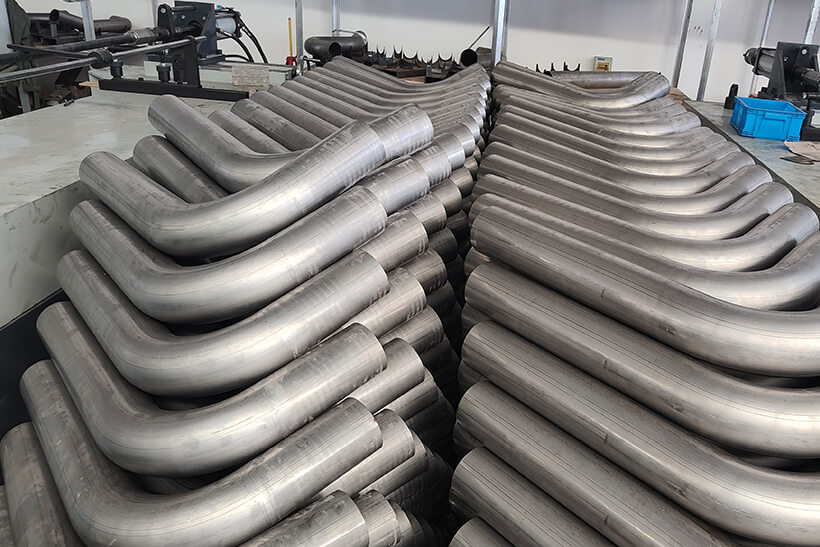
One of the best ways to evaluate a factory is to inspect unfinished, non-surface-treated products.
Why?
- Surface treatments (polishing, coating, chrome plating) can hide defects
- Raw products reveal the true bending quality
Always ask for:
- Photos or samples of raw bends (no polishing, no coating)
6. Complete Mandrel Bending Tooling Range (1″ to 6″)
A strong factory should have a full range of mandrel bending tooling, typically from:
- 1 inch to 6 inch
This indicates:
- Investment in equipment
- Capability to handle different project sizes
- Experience with various applications (automotive, industrial, exhaust systems)
Factories without complete tooling often:
- Outsource part of the work
- Have limited flexibility
7. How to Evaluate Pipe Bends Quality
Here are the most practical ways to judge bending quality:
7.1 Check for Wrinkles
- The inner side of the bend should be smooth
- Wrinkles indicate poor mandrel support or incorrect parameters
7.2 Check for Surface Scratches
- The outer surface should be clean and smooth
- Scratches suggest poor tooling or handling
7.3 Evaluate Wall Deformation
- Excessive thinning or distortion is a red flag
8. Ability to Bend Titanium Tubes (Advanced Capability)
If a factory can bend titanium tubes, it’s a strong indicator of advanced technical capability.
Why titanium matters:
- High strength but low ductility
- Difficult to control during bending
- Requires precise tooling and experience
Many factories in China cannot handle titanium bending, so this becomes a clear differentiator.